How to Taste Wine: A Beginner’s Guide to Seeing, Smelling, and Sipping
Have you ever taken a sip of wine and wondered what you’re supposed to notice? Maybe someone described a wine as having notes of citrus, cherry, vanilla, or freshly cut herbs, and you couldn’t quite find those flavors yourself.
The good news is that wine tasting doesn’t require a trained palate or expensive equipment. It starts with curiosity, a little attention, and the willingness to discover what you enjoy.
Whether you’re exploring your first bottle or looking to get more out of your favorite wines, this simple guide will help you taste wine with greater confidence.
1. Start by looking at the wine
Pour a small amount into a clear glass and hold it against a light background.
Notice its color. White wines might appear pale lemon, golden, or amber. Red wines range from bright ruby to deep purple, garnet, or brick-like tones. Rosé can vary from delicate pink to vivid salmon.
You can also observe how clear the wine looks and whether its color seems light or concentrated.
Color offers clues about grape variety, age, and winemaking, but it doesn’t tell the whole story. A pale wine can be full of flavor, and a dark wine isn’t automatically better.
2. Give the wine a gentle swirl
Swirling the wine in your glass helps release aromatic compounds into the air. You don’t need to make a dramatic motion—just a gentle circle will do.
If you’re new to swirling, keep the glass on a table and move it in a small circle.
Now bring the glass toward your nose.
3. Smell before you sip
A wine’s aromas are a major part of how we experience its flavor. Take a relaxed sniff and notice the first impressions that come to mind.
You might recognize:
- Fruit: lemon, apple, peach, strawberry, cherry, or blackberry
- Flowers: rose, violet, or blossoms
- Herbs and spices: mint, pepper, thyme, or cinnamon
- Other aromas: honey, toasted bread, vanilla, or earth
Different wines express different combinations. A Sauvignon Blanc might remind you of citrus or fresh herbs, while a Pinot Noir may suggest cherries, raspberries, or earthy notes.
You don’t have to identify every aroma. If all you notice is that the wine smells fresh, fruity, or savory, that’s a perfectly good starting point.
Try smelling the wine once, taking a short break, and then smelling it again. Your impressions may change.
4. Take a small sip and pay attention
Now taste the wine.
Rather than swallowing immediately, let a small sip move across your palate. Notice the sensations and flavors.
Ask yourself:
Is it sweet or dry? Some wines have noticeable sweetness, while others taste dry. Ripe fruit aromas don’t necessarily mean a wine contains much sugar.
Is it acidic? Acidity can make a wine feel refreshing and lively. Think of the mouthwatering sensation you get from a squeeze of lemon.
Does it feel light or full-bodied? Body describes the wine’s overall weight and texture in your mouth. A light-bodied wine may feel delicate, while a full-bodied wine can feel richer and more substantial.
Are there tannins? Tannins are compounds often found in red wines. They can create a drying, grippy sensation, similar to strong black tea.
What flavors do you notice? You might recognize fruit, spices, herbs, or flavors that remind you of something you’ve eaten.
There are no points for finding the most complicated description. Your own impressions are what matter.
5. Notice the finish
After swallowing—or spitting out the wine if you’re tasting several—notice how long the flavors remain.
Does the wine’s taste disappear quickly, or do its aromas and sensations linger?
The finish may reveal additional details. You might notice a hint of spice, a pleasant freshness, or a different fruit flavor after the initial sip.
A long finish can be an interesting quality, but it isn’t a guarantee that a wine will suit your personal taste.
6. Think about balance
A wine often feels harmonious when its main elements work together.
For example, acidity can balance sweetness, fruit flavors can complement tannins, and a rich texture can be supported by freshness.
You don’t need to evaluate wine like a professional critic. Simply ask: Does this wine feel enjoyable and balanced to me?
Your answer is more useful than trying to memorize a perfect tasting vocabulary.
7. Compare two wines side by side
One of the easiest ways to learn is to compare two wines.
Try two different Sauvignon Blancs, or a Pinot Noir alongside a Cabernet Sauvignon. Taste each wine using the same steps.
Notice how they differ in aroma, acidity, body, tannins, and finish.
You may discover that you prefer lighter wines, richer textures, more freshness, or a particular kind of fruit flavor. Those preferences can help you choose your next bottle.
A simple wine tasting exercise
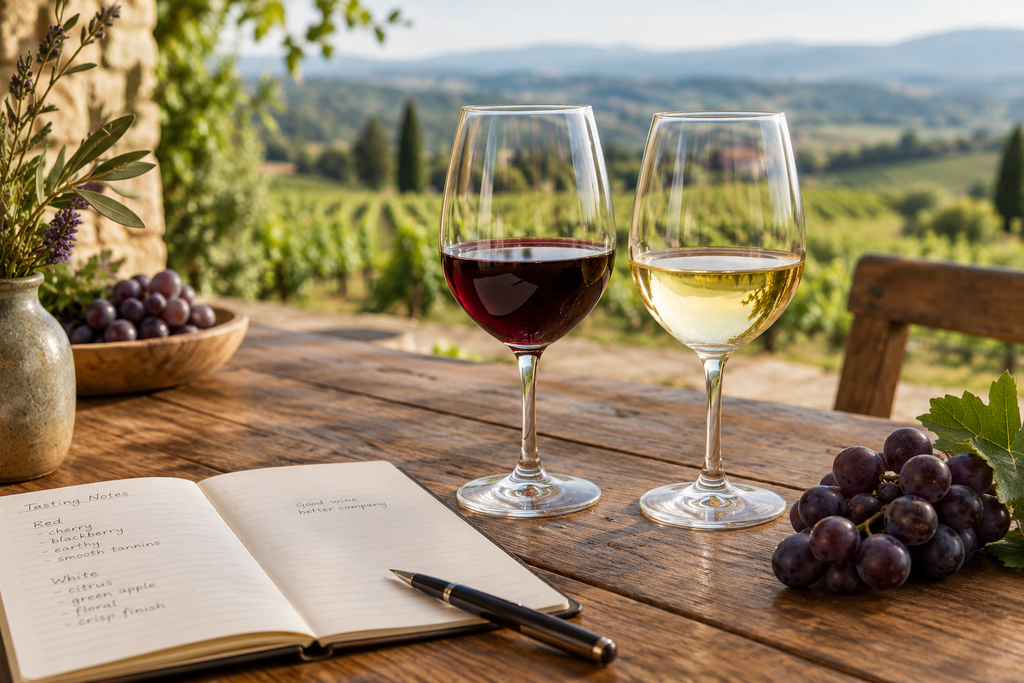
For your next tasting, choose one white wine and one red wine. Pour a small sample of each and use this checklist:
- What color do I see?
- What is the first aroma I recognize?
- Does the wine taste dry or sweet?
- Does it feel light, medium, or full-bodied?
- What flavor stands out?
- Would I enjoy another glass of this style?
Write down a few words for each wine. Over time, you’ll build your own tasting vocabulary and a better understanding of what you like.
The most important rule: Enjoy what you enjoy
Wine tasting isn’t a test. You don’t need to recognize every aroma, know every region, or agree with a critic’s rating.
Some people love crisp, refreshing whites. Others prefer bold reds, sparkling wines, or gently sweet styles. All of those preferences are valid.
The more wines you explore, the more you’ll learn about your own taste—and the more enjoyable choosing a bottle can become.
At Wine Lovers Blog, we’re here to make that journey approachable, one glass and one discovery at a time.
Wine is intended for adults of legal drinking age. Enjoy responsibly, and never drink and drive.